America has changed almost everything about how people travel since 1845. Somehow, the voting schedule survived.
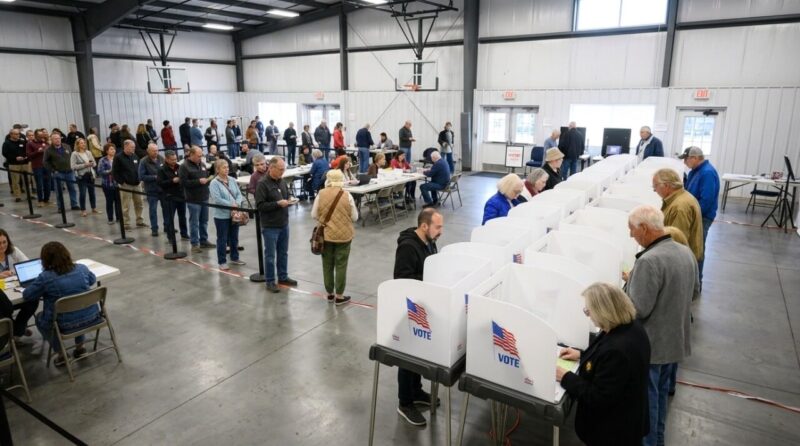
Every November, millions of Americans head to polling places on a Tuesday, often squeezing voting between work, school pickups, and whatever else happens to be on their calendars.
Why Tuesday? Why not Saturday, when considerably more people might have time?
Answers require a trip back to 1845, when horses were transportation, farming shaped the national calendar, and visiting a polling place could mean spending an entire day on the road.
Congress wasn’t trying to inconvenience future office workers. Lawmakers were accommodating an agricultural country where getting to town required planning.
Somehow, a solution designed for farmers became a permanent feature of American democracy.
Before 1845, America Didn’t Have One Election Day
View this post on Instagram
Imagine following a presidential election when different states voted weeks apart. One state announces its results while voters elsewhere haven’t even visited their polling places. Before 1845, that was essentially how American presidential elections operated.
States could select presidential electors during 34 days before the first Wednesday in December.
Results in states that voted early could influence political opinions and turnout in states holding elections later. A contest supposedly decided by voters across the country could develop momentum before everyone had participated.
Congress eventually decided that presidential elections needed a common date.
As a congressional examination of federal election scheduling explains, the old 34-day voting window created opportunities for election abuses when neighboring states selected electors on different dates.
On January 23, 1845, lawmakers approved legislation establishing the Tuesday after the first Monday in November as the uniform day for choosing presidential electors.
Original language is preserved in the 1845 election law published by the Library of Congress.
Importantly, the law concerned presidential electors, not every election in America. Congressional elections acquired the same November Tuesday schedule through later federal legislation.
According to the Congressional Research Service’s history of Election Day, the first presidential election under the new schedule took place on November 7, 1848.
Standardizing the date addressed inconsistent election timing. Choosing that particular weekday required considering something considerably less political: farming schedules.
Why Tuesday Worked for Farmers
Modern voters might calculate how many minutes they’ll spend driving to a polling place.
A rural voter in 1845 faced a different calculation.
Polling locations could be far enough away that reaching town required a full day’s travel by horse or wagon. Returning home could take another day.
Simply choosing a convenient weekday wasn’t enough. Lawmakers had to consider the days surrounding it.
Several established routines shaped the traditional explanation for Tuesday’s selection:
| Day | Why It Mattered |
| Sunday | Church attendance and religious observance made travel difficult. |
| Monday | Monday elections could require traveling on Sunday. |
| Tuesday | Allowed Monday travel, Tuesday voting, and Wednesday market activities. |
| Wednesday | Farmers commonly sold produce and livestock at local markets. |
Consider a farmer living a day’s ride outside the nearest polling town.
He could leave home Monday morning, reach town that evening, vote Tuesday, and potentially handle market business Wednesday before returning.
One trip could accomplish several tasks.
Such an arrangement mattered when transportation consumed considerable time and agricultural work couldn’t simply be postponed.
Of course, not every farmer lived a day’s ride outside town, and market schedules varied by community. Historians generally describe the Sunday-to-Wednesday explanation as the practical reasoning behind Tuesday, rather than a detailed justification recorded in the 1845 statute.
Still, the logic is revealing.
Tuesday wasn’t chosen because it was special. It was chosen because the other days had better things to do.
November Wasn’t an Accident, Either
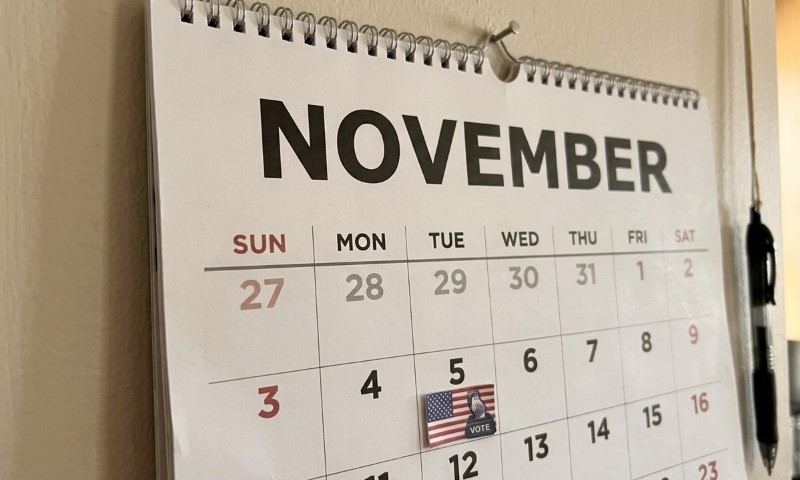
Selecting Tuesday solved only half the scheduling problem.
Congress also needed a month when agricultural workers could reasonably leave their farms.
Spring and early summer were planting seasons. Late summer and early fall brought harvesting responsibilities.
November offered a useful opening.
Much of the harvest was complete, but harsh winter weather had not yet made travel especially difficult.
Agricultural schedules therefore helped shape both the month and the weekday.
Another detail deserves attention: Election Day is not necessarily the first Tuesday in November.
Federal law specifies the Tuesday after the first Monday.
Consequently, Election Day can occur only between November 2 and November 8.
Federal law gets surprisingly specific about the date. Under Title 3 of the U.S. Code, presidential Election Day falls on the Tuesday after November’s first Monday.
That distinction prevents Election Day from falling on November 1.
A common historical explanation links the exclusion of November 1 to All Saints’ Day and early-month business obligations, although the original statute doesn’t explicitly explain that choice.
For a concrete modern example, Election Day in 2026 falls on Tuesday, November 3.
Nobody needs to consult a farmer’s harvest calendar to determine it. A nearly two-century-old formula does the work.
The Farmers Are Gone From the Equation. Tuesday Isn’t.
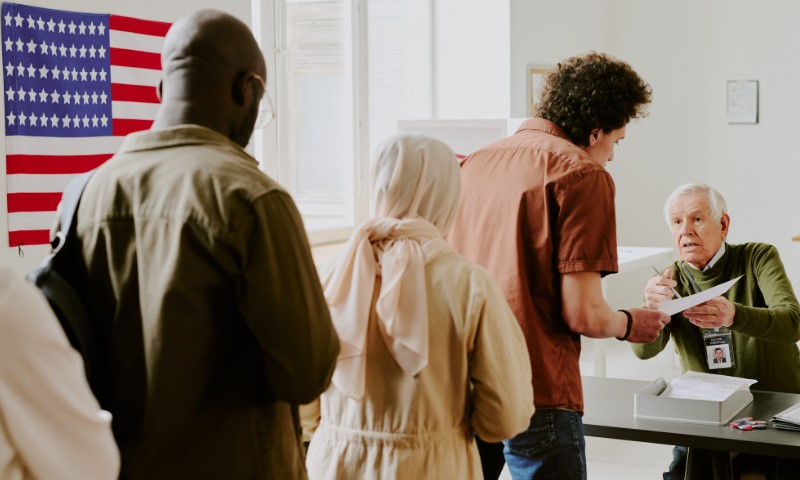
Cars replaced horses. Paved highways shortened travel times. Millions of Americans now work in offices, hospitals, factories, and businesses operating on schedules that have little to do with harvest season.
Yet 181 years after Congress established its presidential election schedule, Americans are still voting according to the same November Tuesday formula.
Federal Election Day is not a nationwide federal holiday. Some states recognize it as a holiday, while others require employers to provide eligible workers time off to vote.
Modern voting options have also reduced dependence on a single Tuesday.
According to the National Conference of State Legislatures’ August 2026 review, 47 states and Washington, D.C., offered early in-person voting to all voters as of April 2026.
Alabama, Mississippi, and New Hampshire did not offer that general option, although eligible voters could have access to absentee voting.
Mail voting provides another alternative, but eligibility, deadlines, and procedures differ among states.
Such changes address a practical problem the original schedule couldn’t anticipate: modern voters may live near their polling places but struggle to find time during a working Tuesday.
One important distinction often gets lost in discussions about changing Election Day.
A 19th-Century Schedule Still Running American Elections
America’s Tuesday voting tradition began as a practical response to two problems: inconsistent presidential election dates and the demands of agricultural life.
Farmers needed time to travel. Market days mattered. Religious observance influenced weekly routines.
Congress established a schedule that made sense for the country it governed in 1845.
Nearly two centuries later, Americans are still organizing Election Day around a calendar built for people who needed Monday to ride into town.
Horses no longer determine how most voters reach their polling places.
Apparently, their old schedule still gets a vote.