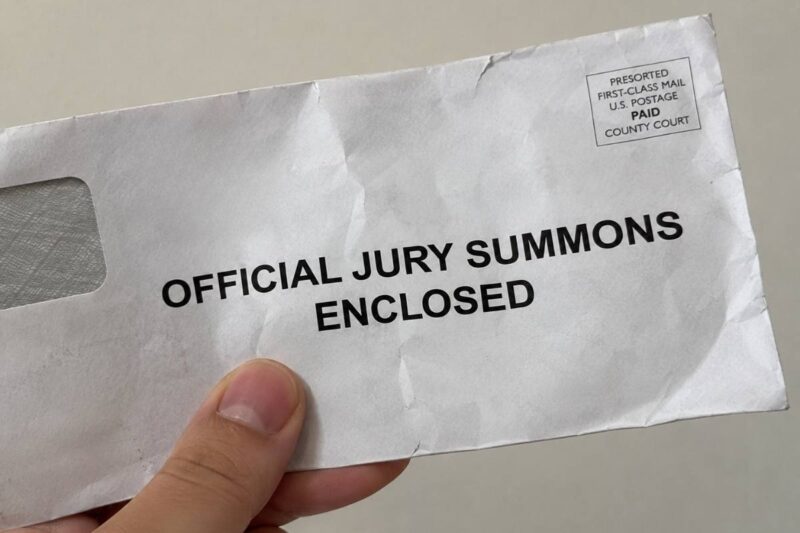
Some people receive jury summonses so often they might reasonably wonder if the courthouse has memorized their address. Others retire without ever being asked to report.
In Vermont, one employee received four jury summonses between 2012 and February 2019, including an assignment to a one-day trial. Most of her coworkers hadn’t been called at all.
Naturally, that raises a question. If jury duty is supposed to be random, why does the same person keep getting picked?
Oddly enough, randomness is a large part of the explanation.
Courts select prospective jurors using government records, computerized drawings, and eligibility requirements. Previous selection doesn’t necessarily prevent another summons, and some people spend decades waiting for a letter that never arrives.
There’s another distinction worth making. Receiving a jury summons and actually sitting through a trial are two very different experiences.
How Your Name Ends Up in the Jury Pool
Nobody needs to sign up for jury duty. In most cases, simply appearing in certain government records is enough to make someone a potential juror.
According to the United States Courts’ explanation of jury selection, federal courts use voter registration lists to identify prospective jurors.
Courts may also use driver’s license records and other databases to help produce a representative selection of eligible residents.
Exact procedures vary by jurisdiction. In federal court, officials maintain a database known as a jury wheel.
Despite the name, modern jury selection generally involves computers rather than someone reaching into a spinning container of names.
Some courts use a two-step system. Names enter a master jury wheel, prospective jurors complete qualification questionnaires, and eligible individuals enter another pool used for future summonses. Other courts use a single-step process.
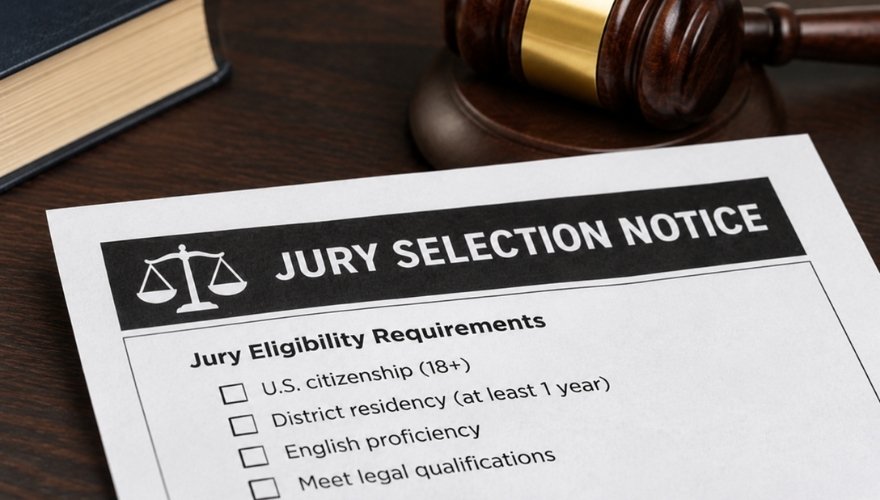
Federal jury eligibility generally requires:
- U.S. citizenship and a minimum age of 18.
- Primary residence in the federal judicial district for at least one year.
- Sufficient English proficiency to participate in proceedings.
- Meeting applicable legal qualifications concerning criminal history and the ability to perform juror duties.
State courts establish their own requirements, which can differ.
Another easily missed detail involves separate court systems. State and federal courts maintain independent jury selection procedures, so being called by one doesn’t automatically remove your name from consideration by the other.
A person could satisfy every requirement and still never receive a summons.
Being eligible only puts your name into consideration. It doesn’t mean the courthouse has an appointment scheduled for you.
Why Some People Get Called Repeatedly While Others Never Do
Here’s where the obvious explanation starts getting interesting.
People often assume random selection should produce roughly equal results. Someone who has received three summonses might expect the system to concentrate on people who haven’t received any.
Except randomness doesn’t work that way. Imagine flipping a coin five times. Getting heads four times doesn’t mean something suspicious happened.
Jury selection follows a similar principle, although actual court procedures involve additional eligibility rules and restrictions.
Consider a simplified example involving 10,000 eligible residents and 1,000 randomly selected names each year.
In other words, approximately 59% of eligible residents would receive no summonses during those five drawings, even though courts selected 1,000 names annually.
Someone else could be selected more than once.
Of course, actual courts don’t all operate through identical annual drawings. Jury pool sizes change, people move, eligibility changes, and previous service can affect subsequent selection.
Local demand matters, too. A courthouse handling numerous jury trials may need a considerably larger pool than one with fewer cases requiring jurors.
Previous jury service also isn’t an automatic lifetime exemption.
Getting Summoned Doesn’t Mean You’ll Actually Serve
Receiving the envelope is only the beginning.
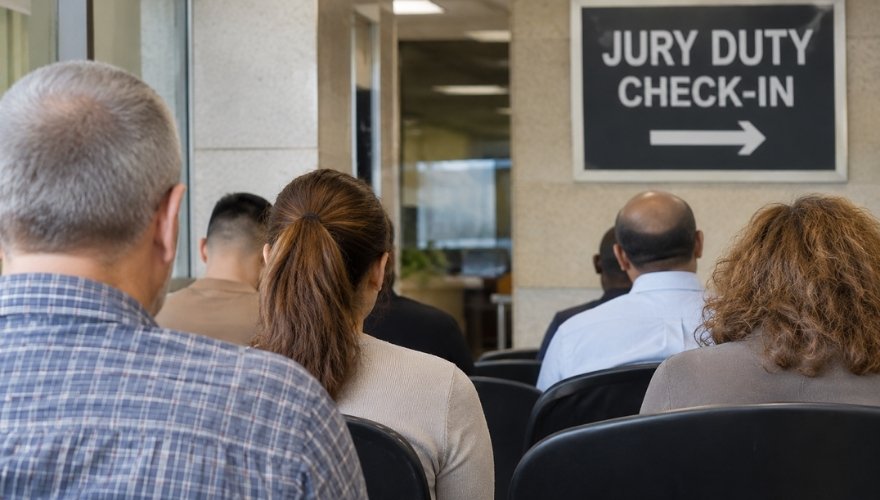
Some prospective jurors complete questionnaires but never have to report. Others arrive at the courthouse, spend several hours waiting, and leave without entering a courtroom.
Anyone required to report also has a few practical details to consider, including what to wear to jury duty. Courts may enforce dress requirements, even when prospective jurors end up spending most of their visit waiting.
Even those brought into a courtroom aren’t guaranteed a jury seat.
A process called voir dire allows judges and attorneys to question prospective jurors about their ability to evaluate a particular case fairly.
Questions may concern prior experiences, opinions, personal relationships, professional backgrounds, or connections to people involved in the trial.
Attorneys generally have two ways to challenge prospective jurors.
Challenges for cause involve a legally recognized reason someone should be excused, such as an inability to evaluate the evidence impartially. Judges decide these challenges, and there is generally no fixed numerical limit.
Peremptory challenges allow attorneys to remove a limited number of prospective jurors without stating a cause in the ordinary selection process. Constitutional restrictions prohibit using them for certain discriminatory purposes, including racial discrimination.
But some people never even reach voir dire. Writer Randall Beach described one particularly ordinary courthouse experience in June 2026. At age 76, he reported for jury duty in Connecticut with approximately 75 other prospective jurors.
After watching an orientation video, everyone waited while court personnel called names. Beach brought a book, expecting he might spend much of the day there. As the hours passed, other people were called while he continued sitting.
Shortly before 1 p.m., court personnel announced that anyone whose name hadn’t been called could leave.
He went home without answering a single question about a case.
His experience demonstrates a frequently overlooked part of jury duty. Courts summon prospective jurors according to anticipated needs, but not everyone reporting will be required for an actual trial.
A person can fulfill the reporting obligation without ever sitting in the jury box.
And for someone who has spent the morning staring at a courthouse wall, that distinction probably feels fairly significant.
How Are Jurors Selected?

Getting summoned for jury duty doesn’t guarantee a seat in the jury box. If you’re unfamiliar with how jury duty works, the process generally begins with a summons, followed by eligibility checks and potentially a trip to the courthouse.
Those selected for further screening go through voir dire, a questioning process where judges and attorneys examine potential biases, personal experiences, and connections to the case.
Want a closer look at how the process works? Watch Jury Selection: An Inside Look At The Process for a behind-the-scenes look at how potential jurors are questioned and selected.
Once selection is complete, chosen jurors take an oath and hear the case. Federal criminal trials typically use 12 jurors, while federal civil trials generally have six to eight.
Random selection gets your name into consideration. Voir dire helps determine who actually sits on the jury.
The Courthouse Hasn’t Necessarily Forgotten You
Jury selection isn’t a waiting list where everyone eventually gets a turn.
Courts draw names according to their selection procedures, check qualifications, and summon people according to their needs. Another round of screening determines who actually participates in a trial.
Some people receive several summonses. Others never see one. Even a person who reports repeatedly might never hear a case.
None of those outcomes automatically indicates a problem with the selection process.
If your name has never appeared on a summons, the courthouse probably isn’t holding a grudge or questioning your ability to make decisions.
Your number simply hasn’t come up.
And that’s the peculiar thing about random selection. It doesn’t always look very random.