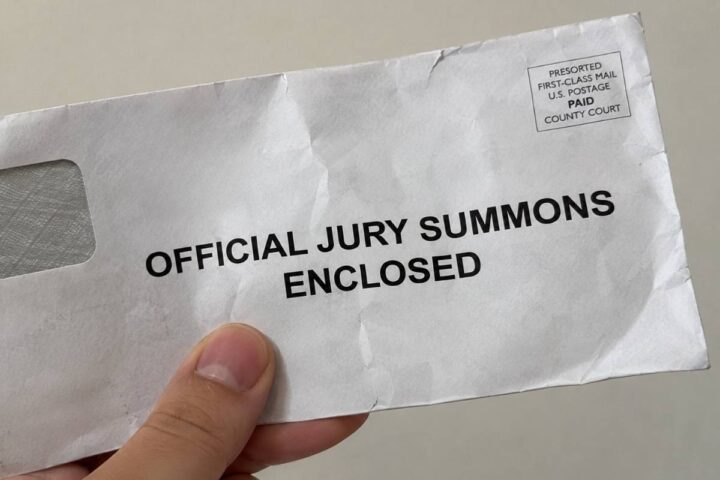
An ordinary trip to the mailbox can produce an unexpectedly official addition to your calendar.
A jury summons has arrived. It contains a courthouse address, a reporting date, and instructions that sound considerably less optional than most invitations.
Suddenly, you’re wondering about work, childcare, parking, and how many days a courtroom might need you.
Here’s the first surprise: receiving a jury summons doesn’t mean you’ve been selected for a trial.
Jury duty involves several stages, and many people never make it past the waiting room. Some receive instructions not to report at all.
Still, a summons carries legal obligations. You must respond, follow the court’s instructions, and wait for official confirmation before considering yourself excused.
Exactly how jury duty works depends on the court, but the basic process is similar across much of the United States.
The Court Picked Your Name. Now What?
Your name wasn’t necessarily selected because you’ve done anything interesting, suspicious, or particularly civic-minded.
Courts use randomized selection systems to identify potential jurors.
Federal courts draw names using voter registration records and, where appropriate, additional sources such as driver’s license lists. State courts follow their own selection procedures.
According to the federal juror selection process, prospective jurors may first receive a qualification questionnaire to determine their eligibility.
Federal eligibility generally requires U.S. citizenship, an age of at least 18, and satisfaction of other legal qualifications.
Receiving a summons is another step in that process.
Your notice should identify the court, provide reporting instructions, and explain how to respond. Depending on the jurisdiction, you may need to complete a questionnaire, confirm attendance, or use an online juror portal.
Pay attention to the response deadline, not just the reporting date.
Some courts require prospective jurors to respond well before anyone is expected at the courthouse.
Ignoring the notice can lead to penalties, including fines or contempt proceedings, depending on the applicable law.
A missed reporting date doesn’t necessarily mean an immediate arrest or fine. Courts may first send another notice or require an explanation, although repeated failures can lead to more serious consequences.
What happens if you miss jury duty depends on the court, how you respond afterward, and how far the matter has progressed.
You Can Ask to Be Excused, but You Can’t Excuse Yourself
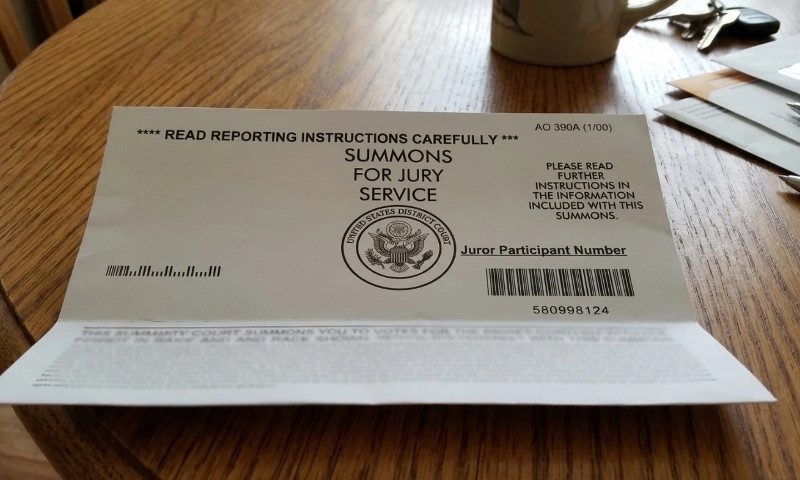
Suppose your jury summons arrives two weeks before a family vacation.
Or perhaps you’ve recently undergone surgery, care for a dependent relative, or cannot afford several unpaid days away at work.
Courts recognize that jury service can create genuine difficulties.
However, there are important differences between postponing service and being excused entirely.
| Request | What it means |
| Postponement | Moves your jury service to another date. |
| Excusal | Releases you under the court’s applicable rules, sometimes because of hardship. |
| Disqualification | Means you don’t meet the legal requirements to act as a juror. |
Medical conditions, serious financial hardship, and essential caregiving duties may justify relief, but approval depends on the court and the circumstances.
For example, Arizona’s Maricopa County Superior Court allows eligible prospective jurors to request a postponement of 60 or 90 days.
Someone with a scheduled vacation can use the court’s online response system to request a later date rather than simply missing the original reporting day.
A judicial officer reviews requests for postponement or excusal.
Submitting a request isn’t the same as receiving approval.
Keep any confirmation and supporting documents. Unless the court approves your request or gives different instructions, your reporting obligation continues.
One easily overlooked detail is that an employer’s objection doesn’t automatically excuse an employee. Some courts require the juror to make the request personally.
You Might Not Have to Show Up After All

Imagine arranging time off, checking the courthouse address, and preparing for an unusually formal Monday morning.
Then, the night before, an automated message tells you not to report.
What happened?
Possibly nothing unusual.
Criminal defendants sometimes enter guilty pleas before trial. Civil cases may settle. Judges can reschedule proceedings, and cases occasionally need fewer jurors than initially expected.
A jury might no longer be necessary.
Courts account for these changes through reporting systems that may require prospective jurors to check their status by telephone or online.
Instructions can change shortly before the scheduled appearance.
There’s another reason to verify jury instructions through the court’s official website or telephone number. Scammers sometimes call people claiming they’ve missed jury duty and must pay immediately to avoid arrest.
A convincing caller ID doesn’t make the threat legitimate. The missed jury duty scam relies on making an ordinary court obligation sound like an emergency.
But there’s a distinction worth checking.
Being told not to report on one particular day doesn’t always mean your entire jury service obligation has ended.
Some courts use multiweek availability periods. A juror may be released for a particular date but still need to check for subsequent assignments.
Read the exact message and follow the instructions covering your full service period.
Your First Day Might Be Mostly Waiting
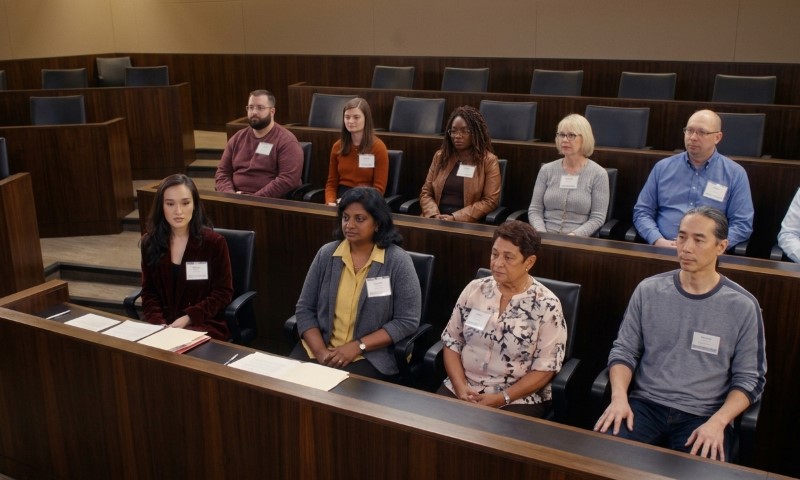
Assuming you’re required to appear, expect something closer to an administrative appointment than a courtroom television drama.
You’ll generally pass through security, check in with court staff, and enter a jury assembly area.
Staff may verify your information, explain procedures, and organize prospective jurors into groups.
Afterward, you might wait.
And wait a little longer.
Courts need enough qualified people available to assemble impartial juries. Some candidates will be excused during selection, while others might have scheduling conflicts or connections to particular cases.
Additional prospective jurors allow courts to fill those vacancies without restarting the process.
Waiting, then, isn’t necessarily evidence of poor planning. It’s partly how the selection system accommodates uncertainty.
What Should You Bring to Jury Duty?
View this post on Instagram
Requirements vary, but a little preparation can make the day considerably easier.
| Item | Why it matters |
| Jury summons | Contains your juror identification and reporting instructions. |
| Photo identification | May be required for identification or courthouse entry. |
| Book or reading material | Helps during potentially lengthy waiting periods. |
| Phone and charger | Useful during breaks, subject to courthouse restrictions. |
| Water or snacks | Helpful if permitted by courthouse security rules. |
| Employer information | Useful when requesting proof of attendance. |
Check the court’s rules concerning prohibited items, electronic devices, clothing, parking, and food before arriving.
Arriving late can also create problems.
Some people will eventually enter a courtroom for jury selection. Others may be dismissed without ever meeting a judge.
Both outcomes are normal parts of the process.
The Court Asks Questions Before It Trusts You With a Case

Getting called into a courtroom doesn’t guarantee a seat on the jury.
First comes voir dire, the questioning process used to determine which prospective jurors can evaluate a particular case fairly.
Judges and, depending on the court, attorneys may ask questions about employment, relationships, previous experiences, and opinions that could affect impartiality.
Consider someone called for a medical malpractice trial who has a close personal relationship with one of the doctors involved.
That connection doesn’t automatically mean the person has done anything wrong. It does mean the court needs to examine possible bias.
Similar concerns can arise when someone knows a witness, has already formed strong opinions about the case, or has a personal interest in its outcome.
Attorneys may request that certain prospective jurors be removed.
One mechanism is a challenge for cause, where a legally sufficient reason supports removing someone, such as an inability to evaluate the evidence impartially.
Federal courts also permit a limited number of peremptory challenges under applicable rules, although those challenges cannot lawfully be used for discriminatory jury selection.
A useful distinction often gets lost here.
Being qualified for jury service doesn’t mean you’re suitable for every particular case.
A person can meet every general eligibility requirement and still be dismissed during voir dire.
Answer questions truthfully, including those that may feel personal or uncomfortable. Judges may allow sensitive matters to be discussed privately.
No law degree is needed, either.
Jurors aren’t expected to know courtroom procedures in advance. They’re expected to listen carefully, consider evidence fairly, and follow judicial instructions.
If You’re Selected, Here’s What Happens During the Trial
Congratulations, in a rather administrative sense. You’ve made it onto the jury.
Your responsibilities now become more specific.
Judges explain courtroom expectations and may administer an oath before proceedings begin.
Although the details differ between civil and criminal cases, a typical trial follows a recognizable sequence.
| Stage | What happens |
| Opening statements | Attorneys explain what they expect the evidence to show. |
| Evidence and witnesses | Each side presents testimony, documents, and other permitted evidence. |
| Cross-examination | Attorneys question opposing witnesses and test their testimony. |
| Closing arguments | Attorneys explain how they believe the evidence supports their case. |
| Jury instructions | The judge explains the applicable law and the questions jurors must decide. |
| Deliberations | Jurors discuss the admitted evidence and work toward a verdict. |
| Verdict | Jurors communicate their decision according to the court’s rules. |
One distinction is fundamental: the judge decides legal questions and instructs jurors on the law, while the jury determines the relevant facts and applies those instructions.
Criminal and civil trials also use different standards of proof.
For example, criminal convictions generally require proof beyond a reasonable doubt.
Many civil claims use the lower preponderance-of-the-evidence standard.
Being Summoned Isn’t the Same as Being Selected
A jury summons can lead to an entire trial, an afternoon of questioning, several hours in a waiting room, or instructions that eliminate the need to visit the courthouse.
All are possible outcomes of the same process.
What matters most is knowing when your responsibility actually begins and ends.
Respond to the original notice, check reporting instructions carefully, and obtain confirmation before assuming you’ve been excused.
Courts need ordinary citizens available to make jury trials possible, even though many summoned individuals will never decide a case.
Your court may never ask you to deliver a verdict.
Until it officially releases you, however, it still expects an answer to that summons.