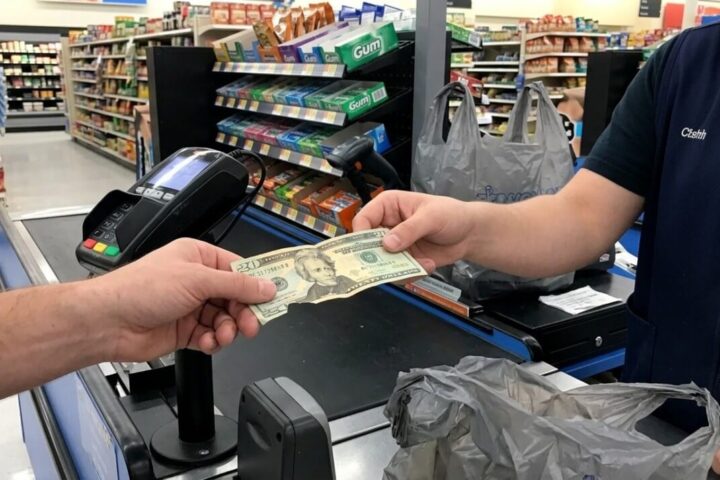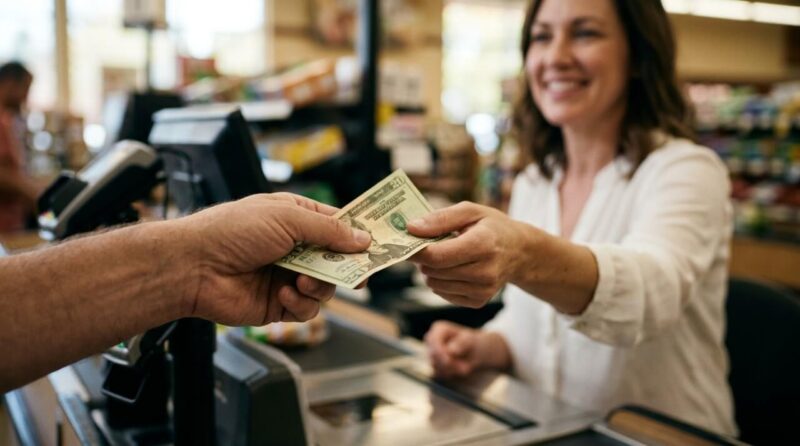
A $20 bill is supposed to be worth $20 everywhere in America. Try spending it at a cashless store, though, and you may discover that its purchasing power has an unexpected condition.
A cashier can refuse it.
Nothing is wrong with the money. It hasn’t expired, and the government hasn’t revoked its value. Yet under federal law, private businesses generally have no obligation to accept cash for ordinary purchases.
Several states have decided otherwise.
As of November 2026, ten states have laws requiring businesses to accept cash in certain circumstances.
Some protect most in-person retail transactions. Others cover only essential purchases or include exemptions that make the rules less straightforward.
So, can a store refuse to accept cash? In many places, yes. In others, that same refusal could result in a fine.
The Words on Your Dollar Bill Don’t Mean What You Think
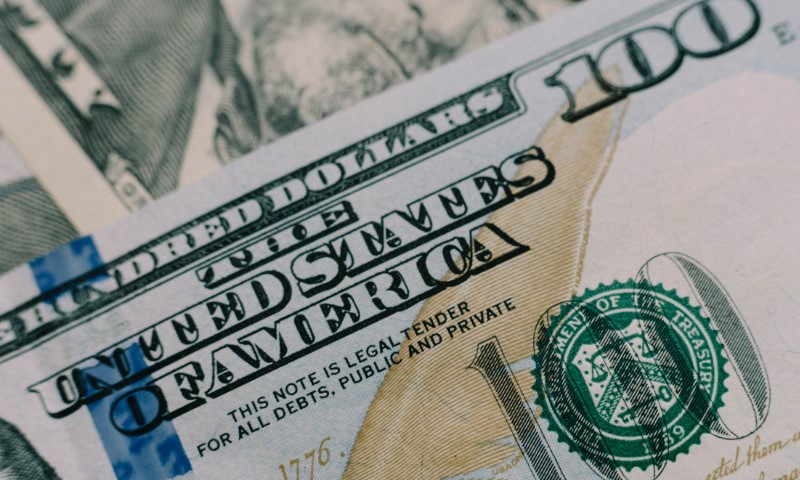
Every dollar bill carries the declaration “This note is legal tender for all debts, public and private.”
It sounds like a pretty convincing argument at the checkout counter.
Unfortunately, legal tender doesn’t mean what many shoppers assume.
Under 31 U.S.C. § 5103, United States coins and currency are recognized as legal tender for debts, public charges, taxes, and dues. In practical terms, cash is a legally recognized means of offering payment toward a monetary obligation.
However, no federal statute generally requires private businesses to accept physical currency for goods or services.
Consider a customer purchasing a $30 sweater. Before completing the transaction, a retailer can generally establish which payment methods it accepts, provided no applicable state or local law prohibits that policy.
An existing debt is a different legal situation. Payment obligations may be governed by contracts, debt laws, and other rules that don’t necessarily apply to ordinary retail purchases.
Federal law recognizes cash as legitimate money. It doesn’t guarantee that every business must accept it.
That distinction explains why a store’s refusal can be perfectly legal, despite the declaration printed on the bill.
Why Stores Can Say “Card Only”
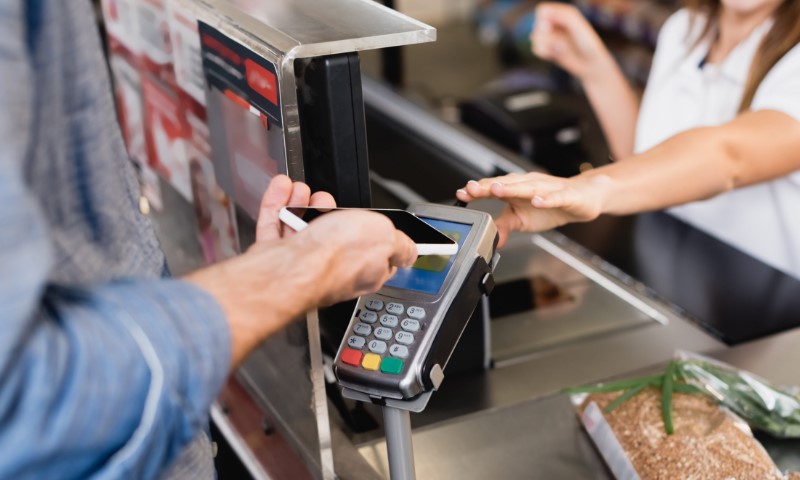
Cashless policies have practical advantages for retailers. Electronic transactions simplify recordkeeping, reduce the need to count and transport currency, and can lower risks associated with keeping cash on-site.
For businesses processing hundreds of transactions daily, eliminating cash drawers can also reduce administrative work.
Customers don’t necessarily receive the same benefits.
Someone without a bank account may have no convenient alternative to physical currency. Others use cash to manage spending, avoid certain fees, or protect financial privacy.
For those shoppers, a card-only policy isn’t merely inconvenient. It can prevent a purchase altogether.
Businesses operating in jurisdictions without cash-acceptance requirements generally retain considerable freedom to establish payment policies.
But there’s an important limitation.
A business policy cannot override an applicable state or local law.
A “Card Only” sign may explain what a retailer prefers. It doesn’t establish what the retailer is legally permitted to demand.
Ten States Where Refusing Cash Can Be Illegal
Massachusetts addressed cash discrimination decades before smartphone payments existed. Its retail cash-acceptance law dates to 1978.
Other states followed much later, particularly as digital payments became more common.
By November 2026, ten states had enacted statewide cash-acceptance requirements covering at least certain retail transactions.
Although all ten states regulate cash acceptance, their laws aren’t interchangeable. Business categories, transaction types, and exemptions differ.
New York’s statewide law, effective March 21, 2026, generally prohibits food stores and retail establishments from refusing cash or charging cash-paying customers higher prices.
Maryland’s approach is narrower.
Effective October 1, 2026, Maryland requires qualifying merchants to accept cash for certain essential goods, including food, beverages, personal hygiene products, health supplies, and fuel.
Its requirements apply to covered purchases totaling at least $5 but less than $300, between 6 a.m. and 10 p.m.
A shopper buying groceries may therefore receive protections that don’t apply to an unrelated purchase at another retailer.
Local governments have adopted additional requirements. Philadelphia and San Francisco, for example, have their own cash-acceptance rules.
Consequently, a payment policy that’s lawful in one city may violate the law in another.
Even Cash-Acceptance Laws Have Exceptions
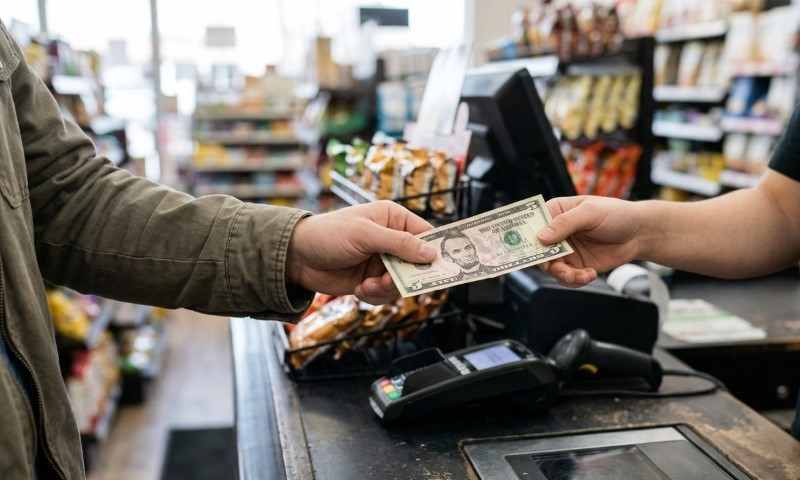
Suppose someone attempts to purchase a $4 coffee using a $100 bill.
A retailer in a cash-acceptance state might still be allowed to refuse that payment.
Why? Because laws requiring cash acceptance don’t necessarily cover every denomination.
New York provides a useful example. Its statewide law allows covered businesses to reject bills larger than $20.
Other notable exceptions concern the type of transaction.
Internet, telephone, and mail purchases may fall outside cash-acceptance requirements, particularly when payment isn’t completed in person.
Some jurisdictions also permit businesses to use cash-to-prepaid-card conversion machines instead of handling currency at the register.
Under New York’s rules, a qualifying machine must allow customers to convert cash without fees and cannot require an initial card load exceeding $1.
Maryland also permits qualifying cash-conversion arrangements, subject to statutory conditions.
Such exceptions explain why a business can sometimes operate with a card-only checkout system without violating a cash-acceptance law.
A legal right to pay with cash doesn’t always mean a right to hand any bill directly to the cashier.
What Happens If a Store Illegally Refuses Cash?
A retailer that violates an applicable cash-acceptance law can face civil penalties.
New Jersey and New York provide two examples of how expensive those violations may become.
| State | First violation | Subsequent violations |
| New Jersey | Up to $2,500 | Up to $5,000 for a second violation |
| New York | Up to $1,000 | Up to $1,500 for each subsequent violation |
Those figures represent statutory maximums under the applicable enforcement provisions, not automatic fines imposed whenever a cashier refuses a bill.
Before reporting a store, customers should establish that the business and transaction fall under the relevant law.
A sensible approach involves checking the state or municipal requirements, asking about another available cash-payment option, and documenting the refusal.
Details such as the store’s name, location, date, and posted payment policy can help consumer protection authorities evaluate a complaint.
Suspected violations can generally be reported to the appropriate state or local enforcement agency.
In New York, customers can contact the attorney general’s office, which accepts complaints involving the statewide cash-acceptance law.
Arguing with an employee is unlikely to accomplish much, particularly when that employee has no authority to change the payment system.
Knowing which rule applies is considerably more useful.
The Bottom Line
A dollar bill doesn’t lose its legitimacy when a business refuses it. Federal law simply doesn’t guarantee acceptance for every private retail transaction.
State and local requirements can change that answer, sometimes substantially. Even then, exemptions involving bill denominations, purchase amounts, and business categories matter.
So before insisting that a cashier must accept your $20 bill, consider the actual legal question.
Not if the money is valid.
If the business is legally required to take it.
As it turns out, the answer can change simply by crossing a state line.