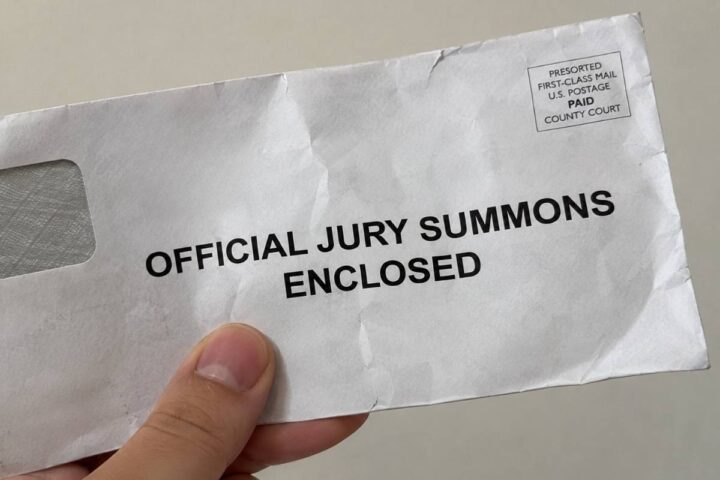
You arrive at the courthouse on time, jury summons in hand, ready to perform your civic duty. Everything seems to be going according to plan.
Except for your shorts.
Apparently, those are a problem.
Courts can enforce surprisingly specific dress codes, even when your summons offers little more than an instruction to dress respectfully. Depending on the courthouse, inappropriate clothing can mean being told to change, denied entry to a courtroom, or ordered to report on another day.
And getting sent home doesn’t necessarily mean getting excused.
Fortunately, avoiding a wardrobe dispute with a judge is usually straightforward.
There’s No Universal Jury Duty Dress Code
Jury duty is a civic obligation, but apparently, dressing for it requires a little local research.
Individual courts establish their own clothing standards, and those expectations can differ considerably.
In Georgia, for example, Superior Courts, State Courts, Municipal Courts, and federal courts may issue different instructions.
Federal courts and larger urban courthouses often expect business casual or more formal clothing, while some smaller jurisdictions may be less restrictive.
Judges also have considerable discretion over courtroom conduct and attire. Even when a courthouse publishes general clothing recommendations, a presiding judge can determine that a particular outfit is inappropriate.
Consider the U.S. District Court for the Central District of California.
Its official instructions strongly suggest business attire and specifically discourage shorts, miniskirts, tank tops, flip-flops, and hats, except those worn for religious purposes. Ties, however, aren’t required.
What Should You Actually Wear to Jury Duty?

Business casual is generally the safest choice for jury duty.
You don’t need an expensive suit, designer shoes, or anything that makes you look like you’re preparing to argue a case before the Supreme Court.
Aim for clean, comfortable clothing appropriate for a professional office:
| Clothing | Good choices |
| Pants | Dress pants, khakis, chinos, or neat slacks |
| Shirts | Button-down shirts, polos, blouses, or modest tops |
| Dresses and skirts | Conservative styles, preferably knee-length or longer |
| Shoes | Closed-toe flats, loafers, low heels, or comfortable dress shoes |
| Extra layers | Cardigans, sweaters, or lightweight blazers |
A suit and tie are usually unnecessary, although some federal courts encourage more formal attire.
Comfort deserves consideration, too.
Jury duty can involve considerable waiting, followed by extended periods sitting inside a courtroom. Clothing that looks perfectly reasonable for a 20-minute appointment might become uncomfortable after several hours.
Courtrooms can also be surprisingly cold.
Federal courts in California, Maine, and several other districts specifically recommend bringing a sweater or jacket.
Shoes should be comfortable enough for walking through the courthouse and standing during security screening.
What Clothes Can Get You Sent Home?

Some clothing choices are risky enough that changing before leaving home is considerably easier than arguing about them at the courthouse.
Depending on local rules, prohibited or discouraged clothing may include:
| Clothing | What to Avoid |
| Shorts and revealing tops | Short shorts, tank tops, halter tops, and plunging necklines |
| Beachwear and casual footwear | Flip-flops, slides, and beach sandals |
| Athletic clothing | Sweatpants, pajamas, gym shorts, workout outfits, and some athletic leggings |
| Damaged denim | Ripped, heavily faded, or distressed jeans |
| Offensive clothing | Shirts featuring profanity, crude graphics, or inappropriate slogans |
| Hats | Baseball caps and casual headwear, subject to religious and other applicable accommodations |
But clothing doesn’t have to be revealing, damaged, or particularly casual to create a problem.
Sometimes, the message printed across it is enough.
Getting Sent Home Doesn’t Mean You’re Off the Hook
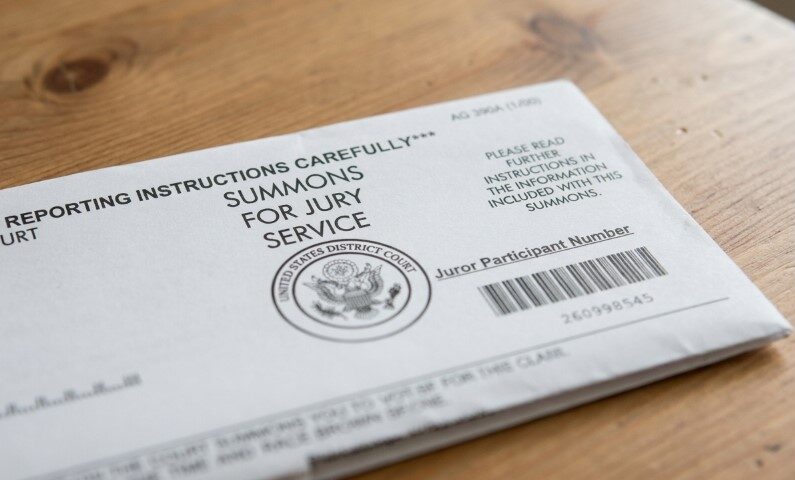
Showing up for jury duty in pajamas might sound like an inventive way to avoid jury selection.
Unfortunately, courts have considered the possibility that people might arrive wearing inappropriate clothing.
And they have ways of handling it.
Court personnel or a judge may instruct an improperly dressed prospective juror to change clothes and return.
Some courts can also require the person to report on another date.
For example, the Central District of California explicitly states that jurors who aren’t appropriately dressed will be sent home and ordered to appear for jury service on a future date.
So the consequence of wearing shorts might be another trip to the courthouse. Not quite the escape plan someone might have imagined.
Can You Get in Legal Trouble for Wearing the Wrong Clothes?

Ordinary dress code violations generally involve a warning, an instruction to change, or a new reporting date.
A judge may also reprimand someone in open court.
More serious consequences become possible when someone deliberately disobeys courtroom instructions or repeatedly refuses to comply with a judge’s orders.
Under those circumstances, contempt proceedings may be possible.
However, wearing an inappropriate outfit isn’t automatically contempt of court. Legal consequences depend on the person’s conduct, the instructions issued, and applicable court procedures.
An accidental clothing mistake is very different from deliberately defying a judge.
Federal law provides a considerably more serious set of consequences for people who fail to comply with a jury summons without good cause.
Under 28 U.S.C. § 1866(g), penalties can include a fine of up to $1,000, as well as up to three days in jail, community service, or a combination of those penalties.
Trying to manipulate jury selection through intentionally inappropriate clothing can therefore create more problems than it solves.
Most importantly, a clothing-related dismissal doesn’t automatically cancel the original jury obligation.
And if you later receive a phone call claiming you missed jury duty and must pay a fine immediately, be suspicious. Jury duty scams often rely on exactly that kind of official-sounding threat.
Check the Rules Before You Leave Home
@calleyblue Happy Monday, GRWM for jury duty!!! #juryduty ♬ original sound – Calley Blue
A few minutes of preparation can prevent an unnecessary return trip, particularly if your courthouse enforces a strict dress code.
Here’s what to check before your reporting date.
| What to check | What to do | Why it matters |
| Jury summons | Read all clothing instructions | Some courts explicitly prohibit jeans, sneakers, or shorts |
| Official court website | Find the juror dress code or FAQ | Online instructions may provide details missing on the summons |
| Unclear clothing rules | Call the jury office | Court staff can clarify permitted clothing |
| Shoes and layers | Choose comfortable footwear and bring a sweater | Security screening and long periods of sitting can affect comfort |
| Possible additional days | Have another suitable outfit available | Selection or trial proceedings may extend over multiple days |
Courthouse security rules aren’t necessarily the same as courtroom dress rules.
An outfit might satisfy the dress code but still include accessories that complicate security screening.
For example, the Southern District of Florida’s jury instructions recommend leaving excessive metal and jewelry at home because jurors must pass through a metal detector.
Check restrictions on personal belongings, electronic devices, and other items while reviewing the clothing requirements.
And remember that arriving at the courthouse doesn’t always mean you’ll immediately enter a courtroom.
Jury selection can involve waiting, answering questions, or receiving additional reporting instructions. If selected for a trial, you may need suitable clothing for several consecutive days.
Preparing for that possibility is considerably easier than discovering it after your first day.
The Court Gets the Final Say
You don’t need to look like a lawyer to participate in jury duty.
Clean pants, a simple shirt, comfortable shoes, and perhaps a sweater will usually put you on the right track.
But your courthouse determines which clothing is acceptable.
A pair of jeans might pass without comment in one federal district and violate an explicit rule in another.
And if you get the rules wrong, a judge may simply tell you to change and return.
Apparently, even getting sent home can come with another appointment.